Posts

Showing posts with the label carbon fiber manufacturer

Carbon fiber pultruded rod

Image
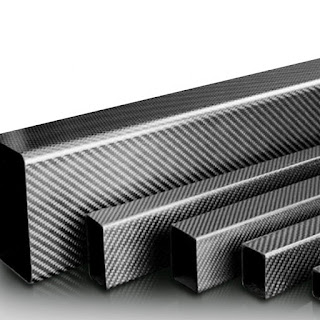
  NitPro Composites manufactures high-quality carbon fiber rods in various lengths and dimensions. It is widely used in various industries due to their exceptional strength-to-weight ratio, high tensile strength, stiffness, and resistance to corrosion. The composite rods are made by pultrusion process, where carbon fibers are impregnated with resin and then cured to form a solid structure as well as roll wrapping.  https://www.nitprocomposites.com/carbon-fiber-pultruded-rods

Innovative Applications of Carbon Fiber in Different Industries

Image
Innovative Applications of Carbon Fiber in Different Industries In the dynamic landscape of modern industries, Carbon fiber is that one material which stands out for its unparalleled versatility and transformative capabilities. With its lightweight yet robust properties, carbon fiber products are revolutionizing numerous sectors, pushing the boundaries of innovation and reshaping traditional practices. From aerospace to automotive, sports equipment to infrastructure, the innovative applications of carbon fiber plates, tubes, and rods have left an indelible mark on diverse industries worldwide. Let's dive into the transformative realm of carbon fiber products across different sectors and uncover the boundless potential they offer for future advancements. Aerospace Industry: In the aerospace industry, carbon fiber products have become indispensable, especially in the quest for lightweight yet robust materials. Carbon fiber plates , renowned for their exceptional stiffness and impres...

Revealing the Heat: An Extensive Analysis of the Thermal Properties of Carbon Fiber

Image
Strength, stiffness, and toughness were among the mechanical properties that were intended to be improved by the majority of materials developed in earlier years. Nonetheless, high thermal capacity is becoming increasingly important, particularly the capacity to withstand high temperatures and swiftly evacuate heat from heat exchangers or other thermal sensing equipment. Carbon fiber is one of the most versatile and revolutionary materials in the field of advanced materials. Carbon fiber products are known for their exceptional strength-to-weight ratio, but they also show significant thermal conductivity, thermal expansion, and Young's modulus at very high temperatures. An intriguing aspect of this amazing material is revealed when one investigates the thermal characteristics of carbon fiber. Understanding the complex thermal properties of carbon fiber, which make it an exceptional option in many industries, will be made easier by this essay. Thermal Conductivity To put it simply,...

Composites in Urban transport

Image
The coiled cylindrical structures form tubes when joined end to end diametrically. When fibers of carbon are embedded in resin, it form a composite of carbon fiber tubes. They are known for their exceptional strength-to-weight ratio and high stiffness and durability. With technological advancements, the improvement of materials for a sustainable environment is increasing day by day. Carbon fiber tubes have grabbed attention in this regard. They are widely used in aerospace, automotive, sports equipment, grid infrastructures, and medical instruments. Carbon fiber tubes are manufactured by pultrusion, roll-wrapping, or filament winding. Continuous carbon fiber filaments are winded around a mandrel in filament winding. This creates a uniform structure. In pultrusion, resin-impregnated carbon fibers are pulled through a die. Each process has its attributes. The choice of manufacturing process depends upon the specific application. Carbon fiber products are being used, from aerospace comp...

Carbon Fiber Manufacturing: Challenges and Solutions

Image
Carbon fiber has emerged as one of the most widely used materials for engineering and manufacturing purposes and has been extensively studied in the past decade. It has been widely used for manufacturing applications including aerospace, automotive, sports, wind, and civil construction, medical fields among others. This post explores the manufacturing processes and provides an in-depth understanding of the current manufacturing technologies, current and future challenges and solutions for its applications, and how they can be improved. Manufacturing of Carbon Fiber: The production process consists of several steps such as; Step 1: Carbonization: It is derived from a mixture of pitch (derived from crude oil) and petroleum naphtha (a mixture of various hydrocarbons). It is first liquefied and then heated to a temperature of 850 degrees Celsius in a furnace. Step 2: Crystallization: This is the heart of the whole production process. The molten, highly viscous, and highly amorphous ...

Is Carbon Fiber Stronger Than Steel?

Image
Carbon fiber is growing in popularity for its characteristics and use in different industrial sectors. It is slowly replacing traditional materials. A very good example is steel. Similar to carbon fiber, steel is strong, light weight, durable and has attributes that are technologically advanced. The material is replaced with the advanced composite material and there are many reasons for it. Carbon fiber offers many positive attributes similar to steel but is five times lighter and about five times stronger making it a better alternative for various purposes. Now, the question arises, whether carbon fiber products are stronger than steel? Yes, the composite material is generally stronger than steel when comparing their strength-to-weight ratios. The low-weight, high-density material is composed of carbon fibers embedded in a polymer matrix. Steel in much denser in comparison and does not stand the strength and weight parameters as the composite material. If you are making the choice ...

Why Carbon Fiber is used in the Manufacturing of Cars

Image
  Carbon fiber products are reinventing the world. The strength-to-weight ratio of the composite material Used for the manufacturing process and design in automation, robotics, aerospace, military structures, sports equipment, and many others, carbon fiber has versatile uses across industries. The composite material has a special purpose in the manufacturing of cars and its parts. Carbon fiber is used in cars for several reasons: Lightweight: An incredibly lightweight material while still maintaining high strength. Compared to traditional materials like steel, aluminum, or fiberglass, carbon fiber is significantly lighter, which helps improve the overall performance of the vehicle. A lighter car requires less power to accelerate, resulting in improved fuel efficiency and better handling. Strength and Stiffness: The excellent high strength-to-weight ratio means it is stronger than many other materials while being lighter. It provides excellent structural strength and stiffnes...

What is the Future of Carbon Fiber?

Image
Carbon fiber has been around for more than half a century and has already made a significant impact in various industries. It is a strong, lightweight material that is popularly used in the aerospace, automotive, and sports equipment industries. As technology continues to advance, what does the future hold for carbon fiber? Will it continue to dominate as a material of choice, or will it be replaced by new materials that offer better properties? In this article, we will explore the future of carbon fiber and its potential impact on different industries. The Current State of Carbon Fiber Carbon fiber is made by weaving or knitting carbon filaments into a fabric, which is then impregnated with a resin and cured in an oven to create a rigid structure. The resulting material has a high strength-to-weight ratio, making it ideal for applications where weight reduction is critical. Carbon fiber is commonly used in the aerospace industry for aircraft parts, such as wings and fuselages, a...